The First 30 Days - A Field Guide
Feb 1, 2025
You don’t need a transformation program, just a clear 30‑day movement plan. Here’s a practical sequence.
Transform chaos into harmony. Just as a conductor aligns musicians toward a shared performance, leaders can orchestrate teams around common goals, creating organizational flow through system thinking rather than siloed initiatives.
Project Symphony provides the framework: orchestrating how work flows through teams, handoffs, and systems. Leaders and practitioners gain a common language to align execution, expose constraints, and sustain improvement, without ceremony bloat.
The Field Guide turns strategy into action: Work Centers, Workflow mapping, assessment checklists, and proven patterns to start where you are and strengthen flow with each iteration.
From scattered effort to shared flow.
When teams dive in separately you get overlap, stalled handoffs, and unclear priorities. A clear model of flow (the score) plus steady guidance (the conductor) turns individual skill into coordinated delivery. Project Symphony gives you that model.
The shift: document the score, then guide each step with data-informed tweaks.
A systematic approach to surface bottlenecks, align improvement efforts, and build sustainable delivery rhythms across teams.
In high-performing organizations, everyone within the team shares a common goal – quality, availability, and security aren't the responsibility of individual departments, but are a part of everyone's job, every day.
From silos to a shared score.
Follow a clear path: understand the system, design the operating score, apply the right framework mix, then iterate through focused improvement loops.
Transform workflow chaos into coordinated delivery.
Project Symphony brings order to complex organizations through system thinking. Just as a conductor aligns musicians toward a shared performance, this practical framework helps leaders orchestrate teams around common goals. You get Field Guide templates, Design Map, role cards, checklists, to align Work Centers and surface constraints. Start with one value stream snapshot and a single improvement loop; progress compounds.
Links open in a new tab to external retailers.
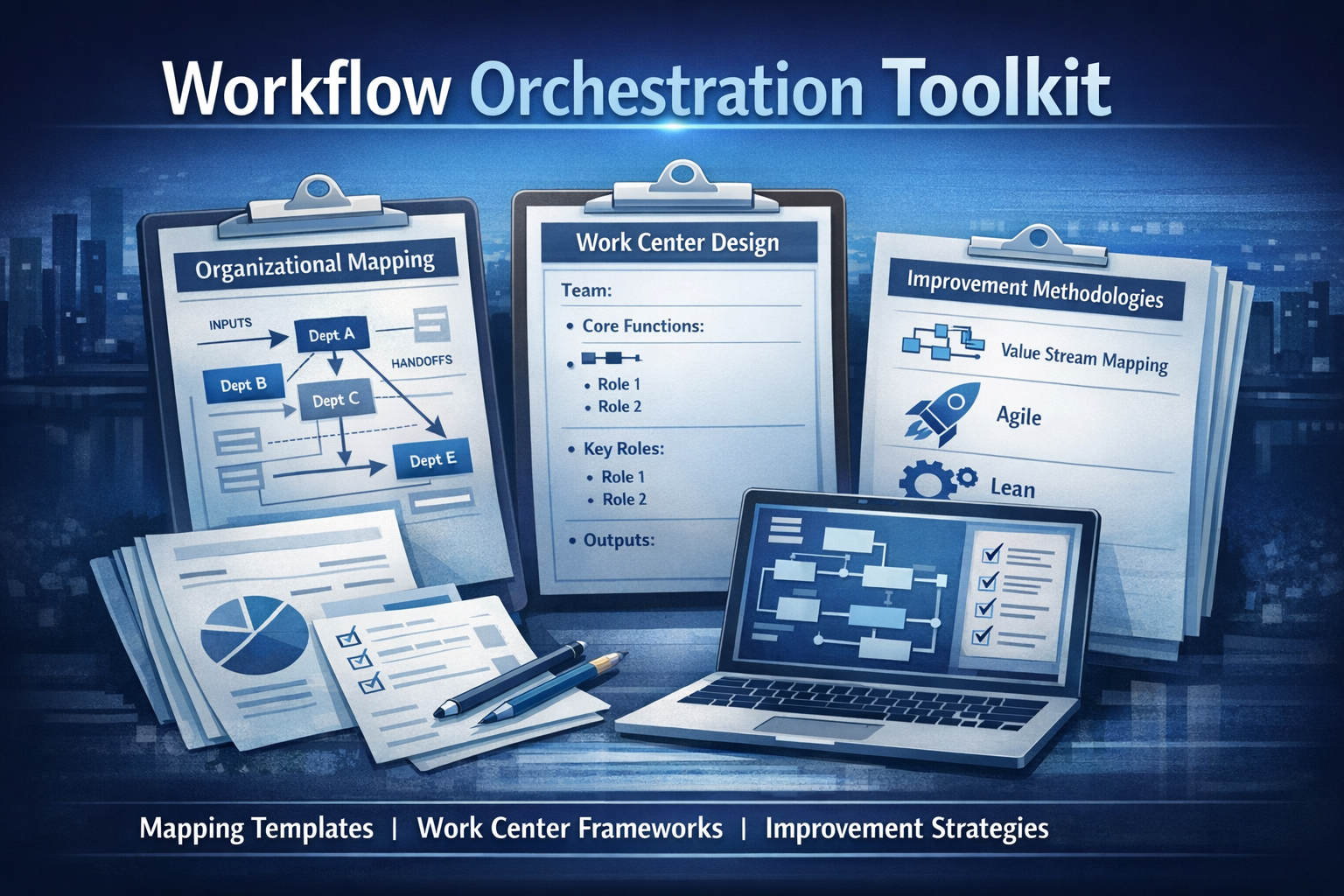
Complete implementation guide with organizational mapping templates, work center design frameworks, and improvement methodologies. Transform disconnected departments into harmonious workflow.
Get the Toolkit
A practical guide to orchestrating people, processes, and priorities into a cohesive system that delivers consistently, without sacrificing adaptability or creativity.
About the BookFeb 1, 2025
You don’t need a transformation program, just a clear 30‑day movement plan. Here’s a practical sequence.
Jan 15, 2025
Silos chase local optimizations; sections create coordinated outcomes. The difference is a shared score and a conductor aligning rhythm a...
Jan 1, 2025
Orchestration provides a shared lexicon for describing how work moves and improving flow. This primer introduces the operating score conc...
Implementation is iterative. Get periodic insights on constraint evolution, process refinements, and proven improvement patterns as your workflow matures.
Get Updates